
Lawn Care Tips for Wisconsin Lawns: How to Grow a Healthy, Thick Lawn
- samantha5319
- Jan 14
- 2 min read
Learn essential lawn care tips for Wisconsin homeowners, including mowing height, fertilization, aeration, overseeding, and seasonal best practices to keep your lawn healthy and green.
Keep Your Grass at the Right Height
For lawns in Wisconsin, the optimal grass height is 3 to 4 inches, with 3.5 inches being ideal.
Many homeowners assume that their mower's deck setting directly matches the height in inches - but this is often not the case. To avoid cutting too short, grab a measuring tape and check the actual height. Cutting your lawn too short is one of the leading causes of:
Pest issues
Weed invasion
Lawn burn
Other diseases
Remember: taller grass develops longer roots, which are essential for a strong, healthy lawn.
Mow Regularly - and Smartly
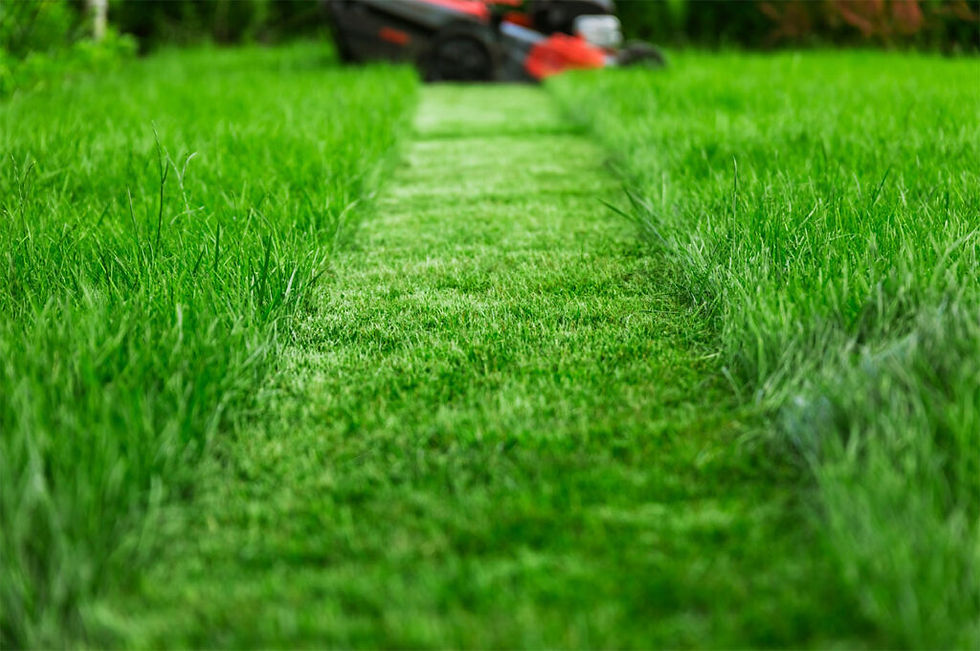
Weekly mowing is a good rule of thumb for most Wisconsin lawns, but during period of rapid growth (like spring or after fertilization), you may need to mow more often. When mowing:
Never cut more than one-third of the grass height at a time.
Change directions each mowing and vary your path to prevent soil compaction and thatch buildup.
Mow when the grass is dry - if wet, proceed slowly and carefully.
Tip: Avoid mowing during the hottest part of the day in extreme heat. Morning or evening mowing reduces stress on your lawn.
During droughts, let your grass grow longer to shade roots and retain moisture. Also, avoid cutting your lawn short during the final fall mowing - this outdated practice doesn't benefit your lawn over winter.
Manage Shade
Heavy shading from trees can inhibit grass growth. If shaded areas are struggling:
Consider lift-pruning lower branches to let more sunlight reach the lawn.
In extreme cases, removing some trees may be necessary for lawn health.

Fertilization
Your lawn needs both macro and micro nutrients to stay healthy. Fertilization is essential - whether you do it yourself or hire a professional. Regular feeding helps maintain a green, thick and resilient lawn.
Core Aeration
Core aeration may sound intimidating, but it's simple and highly beneficial.
Aeration:
Provides oxygen to the root system
Improves soil structure
Allows compost and nutrients to penetrate the soil
This can be done in spring or fall and is a great foundation for healthier, stronger grass.

Overseeding
If your lawn is thinning or has bare patches, overseeding after aeration introduces new grass seed into the soil. This helps rejuvenate your lawn and improve its overall density.
Leaf Management
Fall leaves can be a challenge for lawns. Leaving a thick layer of leaves on your grass can cause die-back in the spring. To prevent this:
Remove leaves or mulch them into your lawn to naturally return nutrients to the soil.
If you mulch and can no longer see your grass, remove the excess - too much leaf material can suffocate your lawn.
With these tips, your Wisconsin lawn can flourish year-round. By combining proper mowing techniques, fertilization, aeration, overseeding, and leaf management, you'll be well on your way to a thick, healthy, and beautiful lawn that enhances both your home and your outdoor living space.


Comments