
Is Your Tree Struggling? What to Look for Before Winter
A fall guide to spotting tree and shrub health problems before another Wisconsin winter.
As the growing season winds down and leaves begin to change, it's easy to assume that a tree looking a little rough is simply getting ready for winter.
Sometimes, that's exactly what's happening.
Other times, fall can reveal signs that a tree or shrub has been struggling throughout the growing season.
The good news? A declining tree doesn't automatically mean a dead tree - and it doesn't automatically mean it's time for the chainsaw.
Understanding why a plant is declining is the first step toward determining what, if anything, can be done to help it.
First: What's Normal in Fall?
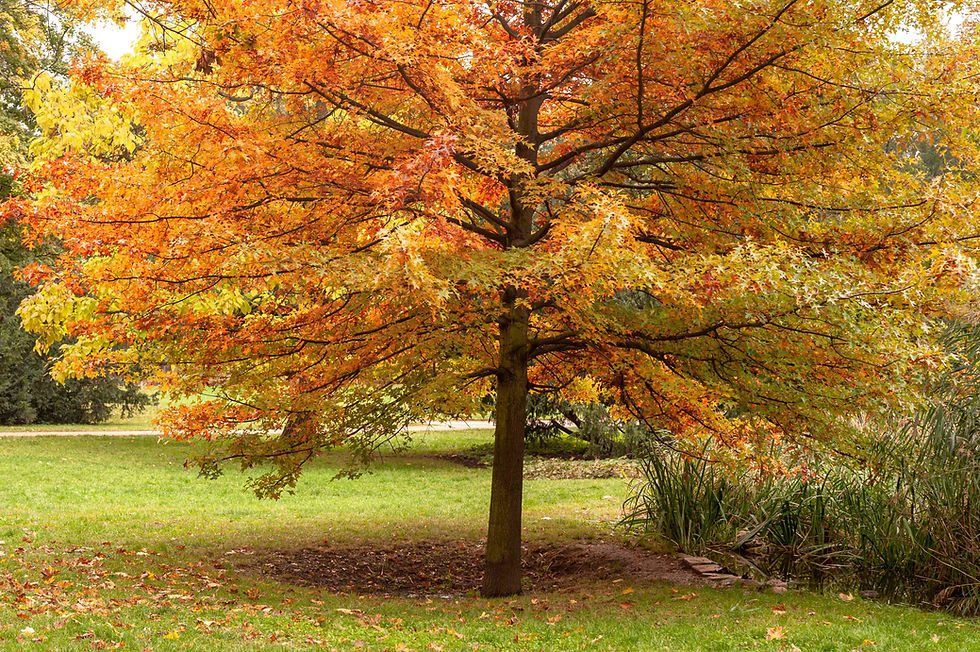
Before worrying about your trees, remember that they're preparing for dormancy.
Leaves changing color and eventually dropping from deciduous trees is completely normal. Some plants will look a little less impressive as temperatures cool and the growing season ends.
What deserves a closer look is unusual or significant decline, especially when one tree looks noticeably different from other of the same species nearby.
Keep an eye out for:
Dead or thinning sections of the canopy
Premature leaf drop
Unusually small, discolored, spotted, or curled leaves
Dead or broken branches
Cracks, wounds, or cavities in the trunk
Mushrooms or fungal growth around the trunk or root zone
Insect activity or unusual holes in the bark
Peeling or abnormal bark
Significant branch dieback
Exposed, damaged, circling, or girdling roots
A tree that simply isn't growing or looking the way it used to
One symptom doesn't always tell the entire story. That's why figuring out the underlying cause matters.
Why Do Trees Decline?
Trees are living systems, and decline isn't always caused by on obvious problem.
Sometimes we're looking for an insect or disease when the real problem is happening underground.
Common contributors can include poor soil conditions, compaction, drought stress, excessive moisture, drainage problems, improper planting depth, root damage, stem-girdling roots, nutrient deficiencies, insects, disease, construction damage, or environmental stress.
In many cases, several stresses can occur at the same time.
That's also why simply applying fertilizer - or immediately removing the tree - isn't always the right answer.
Treatment should start with understanding the problem.

Don't Forget About What's Happening Below Ground
We naturally look at the branches and leaves when a tree appears unhealthy, but its root system and surrounding soil are just as important.
Compacted soil can limit the movement of air and water through the root zone. Poor drainage can leave roots sitting in overly wet conditions. Trees planted too deeply may develop problems around their root collar. Roots can also begin growing around the trunk rather than outward, potentially restricting normal growth over time.
Depending on the issue, improving the tree's growing environment may involve techniques such as:
Root Collar Excavation
Carefully exposing the base of the tree can help identify planting-depth issues, buried root collars, problematic roots, and other conditions that aren't visible from the surface.
Stem-Girdling Root Remediation
When roots are growing against or around the trunk, they may need to be evaluated and, when appropriate, selectively addressed.
Vertical Mulching / Soil Decompaction
Improving compacted soil around the root zone can help create better conditions for air, moisture, and root development.
These aren't treatments every tree needs - but they're examples of why looking below the surface can be so important.
Heading Into Winter? Pay Attention to Water
One of the simplest things homeowners can do for their trees and shrubs is also one of the easiest to overlook.
Don't assume cool weather means plants no longer need water.
If we've experienced a dry late summer or fall, younger trees, recently planted trees, and certain shrubs may benefit from supplemental watering before the ground freezes.
Adequate soil moisture heading into winter can be especially important for evergreens, which continue losing moisture through their foliage during winter.
At the same time, more water isn't always better. If an area stays constantly saturated or collects standing water, you may be dealing with a drainage issue instead.
Should You Fertilize Trees in the Fall?
Maybe - but don't automatically reach for a bag or fertilizer just because a tree looks unhealthy.
If poor nutrition or soil conditions are contributing to a plant's decline, an appropriately selected fertilization or soil-health program may be beneficial.
At YPGA, deep-root fertilization is one of the Plant Health Care tools we can use when it's appropriate for the tree and site.
The important part is that we're treating based on the plant's needs rather than assuming every struggling tree needs the same treatment.
Could It Be an Insect or Disease?
Absolutely.
Trees and shrubs in Southeastern Wisconsin can be affected by numerous insects and diseases, and some problems become much easier to recognize after symptoms have developed throughout the growing season.
The important thing is to identify the problem before treating it.
Different pests and diseases have different treatment windows, and spraying something simply because a tree "looks sick" isn't a good plant-health strategy.
Sometimes treatment can begin in fall. Sometimes the best course of action is to document the symptoms now and develop a treatment plan for the following growing season.
Either way, fall is a great time to start paying attention.

Should I Cut Back Dead or Struggling Branches?
Dead, broken diseased, and hazardous branches should certainly be evaluated, but resist the temptation to aggressively prune a struggling tree simply to "clean it up."
Proper pruning depends on the tree species, its health, the type of damage, and the time of year.
And if a tree is already stressed, unnecessarily removing healthy canopy can create additional stress.
When in doubt, have the tree evaluated before making major cuts.
One of Our Favorite Fall Tips: Take Pictures
Seriously.
Before all the leaves disappear, take photos of anything that looks unusual.
Photograph the entire tree, affected leaves, branches, the trunk, and the area where the trunk meets the soil.
Those pictures can be incredibly helpful later.
Once a deciduous tree loses its leaves, some symptoms become much harder to see. Having photos of what the tree looked like during the growing season can provide useful clues when evaluating the problem and planning for spring.
Don't Jump Straight to the Chainsaw
When homeowners see a declining tree, it's understandable to immediately wonder:
"Do we need to take it down?"
Sometimes removal really is the safest or most appropriate option - especially when a tree is dead, structurally compromised, hazardous, or too far into decline.
But it shouldn't automatically be the first conclusion.
At Your Personal Gardener & Arborist, our goal is to look at the entire picture: the tree, roots, soil, environment, insects, disease, and other stresses that may be contributing to the problem.
When preservation is realistic, Plant Health Care may give us options to improve the conditions surrounding the tree and help support its long-term health.
And when a tree truly does need to come down, we'll tell you that too.
Notice Something That Doesn't Look Right?
Fall is a great time to take a closer look at your trees and shrubs and make a plan before the next growing season.
If you've noticed thinning, discoloration, dieback, unusual roots, insect activity, or simply a tree that doesn't look as healthy as it once did, don't wait until the problem becomes impossible to ignore.


Comments